
The digital marketplace has transformed how artists connect with audiences and monetize their creativity. Gone are the days of relying solely on traditional galleries and physical exhibitions. Today, platforms like Shopify empower creators to build their own brands, control their sales funnels, and reach a global customer base directly from their own online storefront. This shift puts the power back into the hands of the artist, offering unprecedented control over both the creative vision and the business operations.
This article moves beyond abstract concepts to explore 10 diverse and practical art business ideas you can launch and scale using the Shopify ecosystem. Each idea is tailored for the modern creator, focusing on how to leverage the platform's powerful e-commerce features. We will provide actionable steps for setting up everything from print-on-demand services and custom commission portals to digital art courses and exclusive NFT drops. To ensure your artistic venture thrives in a competitive market, it's crucial to pair your creative talent with robust business tactics. Building a solid foundation with proven eCommerce growth strategies will be key to transforming your passion into a sustainable and profitable online business. Let's dive into the specific models that can turn your art into your enterprise.
1. Print-on-Demand Art Business
A print-on-demand (POD) art business is one of the most accessible art business ideas for creators looking to monetize their work with minimal financial risk. This model allows you to sell your designs on products like art prints, t-shirts, and mugs without handling inventory, printing, or shipping yourself.
When a customer makes a purchase from your Shopify store, the order is automatically sent to a third-party POD app, such as Printful or Printify. They handle the entire fulfillment process, from printing your design onto the product to packaging and shipping it directly to the customer. This frees you up to focus on what you do best: creating art and marketing your brand. A practical example would be an illustrator creating a series of botanical designs and selling them on tote bags, phone cases, and posters through a Printful integration on their Shopify store.
Key Considerations
Setting up a POD business involves integrating a service provider with your Shopify store. Your primary tasks will be creating compelling artwork, selecting the right products to feature, and driving traffic to your store. Branding is crucial; a consistent aesthetic across your art, product mockups, and marketing materials will help you stand out.
Pro Tip: Don't just upload a design and forget it. Use your chosen POD app to order samples of your products to verify print quality, color accuracy, and material feel. A high-quality end product is essential for customer satisfaction and repeat business.
The infographic below highlights key data points about the print-on-demand market.
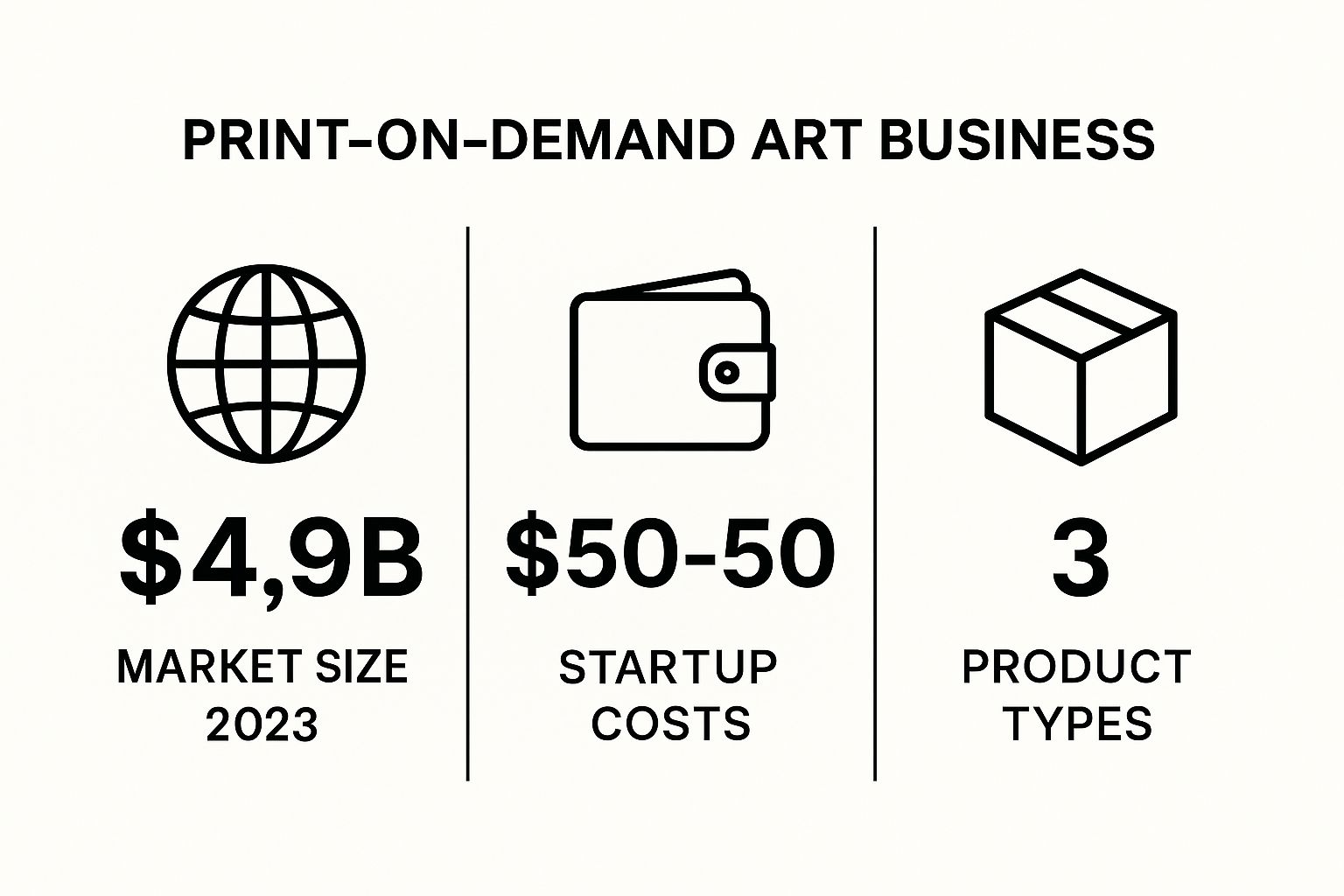
These statistics reveal a rapidly growing market with an incredibly low barrier to entry, making it an ideal venture for emerging artists.
Actionable Steps
- Find Your Niche: Focus on a specific theme or style, like minimalist line art for home decor or vibrant patterns for phone cases.
- Set Up Your Shopify Store: Choose the best e-commerce platform for your small business and integrate a reliable POD app like Printify from the Shopify App Store.
- Create High-Quality Mockups: Use high-resolution mockups to display your designs realistically on your chosen products within your Shopify listings.
- Market Your Art: Promote your store on social media platforms where your target audience is active, such as Instagram, Pinterest, or TikTok.
2. Custom Portrait and Commission Services
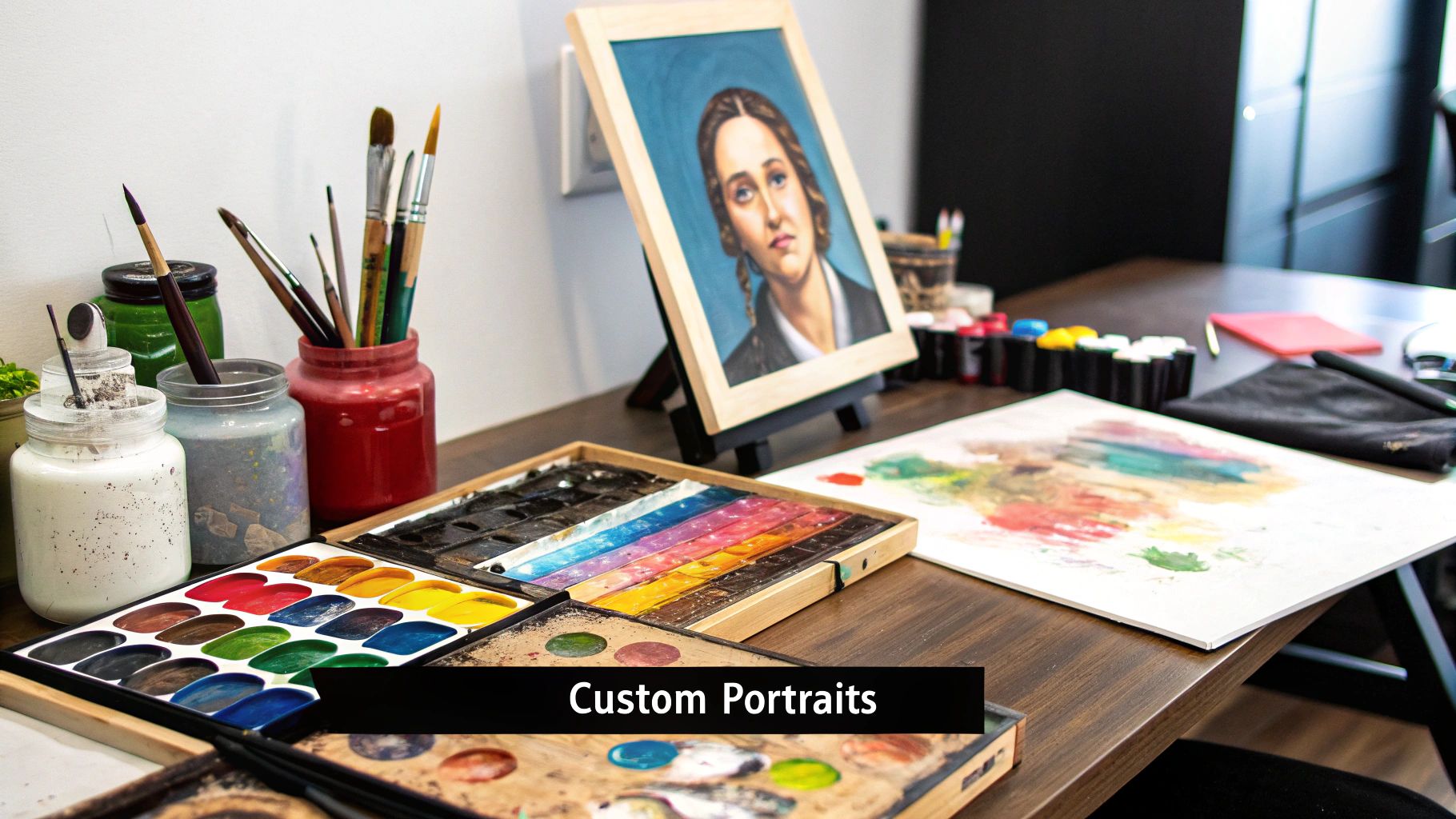
Offering custom portraits and commissions is a powerful way to turn your artistic talent into a personalized service. This business model involves creating one-of-a-kind artwork, such as pet portraits, family illustrations, or wedding paintings, directly for clients based on their specific requests and reference photos.
This direct-to-consumer approach builds a strong connection with your audience and often commands higher price points than pre-made art. Using your Shopify store, you can create product pages for different commission types (e.g., "Digital Pet Portrait," "Oil Painting on Canvas"). A practical example would be installing a Shopify app like Product Customizer, which allows you to add custom upload fields for reference images and detailed instruction text boxes, streamlining the entire order process.
Key Considerations
Success in the commission business relies on clear communication, managing client expectations, and showcasing a high-quality portfolio. Your Shopify store should clearly display examples of your work, pricing tiers, and a detailed outline of your process, from initial consultation to final delivery. A well-defined contract or terms of service page is essential to protect both you and your client.
Pro Tip: Create a detailed commission agreement or use a Shopify app like Form Builder with File Upload to create an intake form. Specify the number of revisions included, project timelines, and usage rights to prevent misunderstandings and scope creep.
Managing your workflow is key. As demand grows, you can integrate Shopify with project management tools to track progress on each piece.
Actionable Steps
- Build Your Portfolio: Dedicate a section of your Shopify site to a portfolio that showcases your stylistic range and the types of commissions you offer.
- Define Your Offerings: Create clear product listings on Shopify for different commission types, such as "Headshot Sketch," "Full-Body Digital Illustration," or "Acrylic on Canvas."
- Establish a Clear Process: Outline your commission process on a dedicated page, explaining how clients submit requests, the revision rounds, and expected delivery times.
- Promote Your Service: Use social media like Instagram to post time-lapse videos of your work and share finished commissions (with client permission) to attract new customers.
3. Online Art Education and Courses
Capitalizing on your artistic expertise is one of the most rewarding art business ideas, and creating educational content allows you to do just that. This model involves selling your knowledge through video courses, live workshops, or exclusive tutorials hosted on your Shopify store, catering to both aspiring artists and creative hobbyists.
Using an app like Courses or Memberships from the Shopify App Store, you can host and sell digital content directly. A practical example would be selling a one-time course on a specific skill, like "Introduction to Digital Painting in Procreate," or creating a subscription product for a monthly membership that grants ongoing access to new tutorials, downloadable resources, and a community forum. This approach positions you as an expert and builds a loyal following.
Key Considerations
Success in art education hinges on your ability to break down complex concepts into simple, engaging steps. Your primary focus will be on creating high-quality video content and structuring a logical curriculum. A practical example of engagement is building a community around your courses through a private Discord server, accessible only to customers who purchase your course via your Shopify store.
Pro Tip: Start by offering free, valuable content on platforms like YouTube or Instagram to build an audience and establish credibility. Use these channels to understand what your potential students want to learn and then create premium, in-depth courses to sell on your Shopify site.
This business model transforms your artistic skill into a scalable digital product with high-profit margins.
Actionable Steps
- Define Your Teaching Niche: Focus on a specific medium or style you excel at, such as watercolor botanicals, character design, or oil painting fundamentals.
- Structure Your Course: Outline a curriculum with clear modules and lessons. Create supplementary materials like downloadable worksheets, brush packs, or reference photos.
- Set Up Your Platform: Integrate a course-building app like Thinkific or Teachable with your Shopify store to manage content, enrollment, and payments seamlessly.
- Engage With Students: Actively answer questions, provide constructive feedback, and foster a supportive learning environment to build a strong community.
4. Art Curation and Gallery Services
Launching an art curation service is one of the more sophisticated art business ideas that positions you as an expert tastemaker. This model involves selecting and sourcing artwork for corporate clients, hospitality venues, healthcare facilities, or private collectors, transforming their spaces and managing their art assets.
Instead of just selling art, you provide a comprehensive service. This includes understanding the client's brand or personal taste, sourcing pieces from artists, and overseeing installation. A practical example within the Shopify ecosystem would be creating a password-protected B2B portal using an app like Wholesale Lock Manager. This allows corporate clients to view curated collections and pricing not available to the public, or manage their existing art portfolio with your guidance.
Key Considerations
Success in art curation hinges on building a strong network of both artists and clients. Your primary role is to bridge the gap between them, matching the right art to the right environment. You'll need expertise in specific art movements or industries, a keen eye for design, and strong project management skills to handle budgets, logistics, and installations.
Pro Tip: Create detailed case studies for each project on your Shopify blog. A portfolio page showcasing a transformed hotel lobby or a cohesive corporate collection is your most powerful marketing tool, demonstrating your expertise and the tangible value you provide.
Building trust is paramount. Clients are relying on your vision and industry knowledge to make significant investments.
Actionable Steps
- Define Your Curation Niche: Specialize in a sector like tech startups, boutique hotels, or minimalist residential interiors to become a go-to expert.
- Build a Digital Portfolio: Use a Shopify store with a premium theme to showcase past projects. Create blog content that highlights your curation philosophy and artist collaborations.
- Network Strategically: Connect with interior designers, architects, and corporate art consultants who can become valuable referral partners.
- Develop Tiered Service Packages: Create product pages on your Shopify store for different levels of service, from a one-time "Art Selection Consultation" to a full-service "Ongoing Collection Management" subscription.
5. Art Therapy and Wellness Programs
An art therapy or wellness program is one of the most impactful art business ideas for creators who want to use their skills to facilitate healing and personal growth. This model involves guiding individuals or groups through creative processes to improve mental, emotional, and physical well-being. It moves beyond selling a product to offering a transformative service.
Instead of selling physical art, you market and deliver structured workshops and sessions. A practical example is using your Shopify store to sell tickets to a "Mindful Painting for Stress Relief" virtual workshop or a multi-week "Expressive Arts for Personal Development" online course. You are selling access to a guided experience that leverages art as a tool for therapy and wellness, with all bookings and payments handled through Shopify's platform.
Key Considerations
Building a business in this space requires a unique blend of artistic talent and therapeutic knowledge. While you can offer general art wellness workshops, practicing formal "art therapy" often requires specific certifications or licenses, so it's crucial to understand your local regulations. Your Shopify store will act as the hub for booking sessions, processing payments, and providing clients with course materials.
Pro Tip: Partner with corporate wellness programs, healthcare providers, or community centers to build credibility and reach a wider audience. Offer a free introductory webinar, managed through a Shopify booking app, as a powerful way to demonstrate the value of your services and attract paying clients.
Your primary focus will be on creating a safe, supportive environment and designing programs with clear, therapeutic goals.
Actionable Steps
- Define Your Service: Specialize in a specific area, such as corporate team-building workshops, art sessions for seniors, or creative coaching for individuals managing anxiety.
- Get Certified (If Necessary): Research the requirements for practicing art therapy in your region. For general wellness workshops, consider certifications in mindfulness or coaching.
- Build Your Online Platform: Use Shopify to create a professional website. Install an app like Sesami or Acuity Scheduling to manage bookings and appointments directly through your store.
- Showcase Your Impact: Use your Shopify blog and social media to share testimonials (with permission), case studies, and the science behind art's therapeutic benefits to build trust.
6. Digital Art and NFT Creation
Selling digital art as NFTs (Non-Fungible Tokens) is one of the most modern art business ideas, allowing creators to offer verifiable ownership of their digital works. This model operates on the blockchain, where each piece of art is "minted" as a unique token, creating a digital certificate of authenticity that can be bought, sold, and collected.
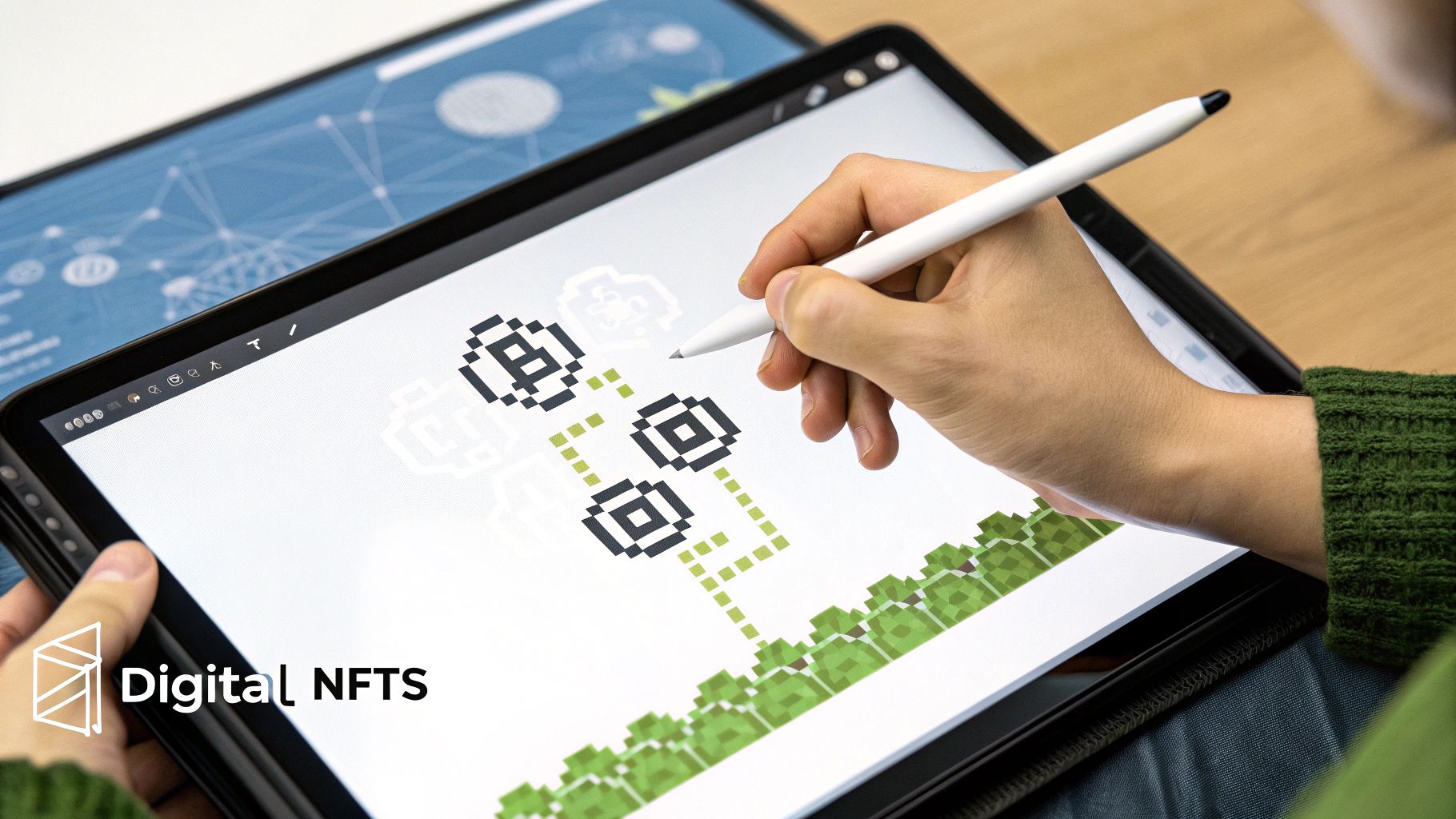
Unlike traditional art, NFTs can be programmed with smart contracts that automatically pay you a royalty percentage on every future resale. For Shopify merchants, this opens up a new frontier. A practical example is using a Shopify app like Manifold to mint your digital art and sell it directly from your storefront, connecting your work with a global community of collectors without sending them to an external marketplace.
Key Considerations
Entering the NFT space requires understanding blockchain technology, gas fees (transaction costs), and the culture of the Web3 community. Success isn't just about creating great art; it's about building a following and engaging with potential collectors on platforms like Twitter and Discord. For digital artists looking to enter the NFT space, understanding how to manage the underlying technology is key. You can even learn to build smart contracts without any code.
Pro Tip: Don't just list your art and wait. Build a narrative around your collection and engage directly with the NFT community. Host Twitter Spaces, share your creative process, and collaborate with other artists to build momentum before your launch.
This approach transforms your art into a unique, tradable digital asset, creating long-term value beyond the initial sale.
Actionable Steps
- Educate Yourself: Learn the basics of blockchain, crypto wallets, and how NFT marketplaces function.
- Build Your Community: Engage with the NFT community on Twitter and Discord to build a following before you launch your collection.
- Choose Your Platform: Select a Shopify app like Venly or Manifold to mint and sell your NFTs directly through your storefront, providing a seamless checkout experience.
- Create a Compelling Collection: Develop a series with a unique theme, style, or story that will resonate with collectors and stand out in a crowded market.
7. Art Supply Store and E-commerce
Opening an art supply store is one of the most direct art business ideas for connecting with the creative community. This retail model involves selling art materials, tools, and supplies to artists, students, and hobbyists through a dedicated Shopify e-commerce site. You become the go-to source for the very tools creators need to bring their visions to life.
By setting up a Shopify store, you can curate a unique collection of products, from professional-grade paints to specialty papers. A practical example would be creating "Project Kits" as distinct products on your Shopify store, like a "Beginner's Watercolor Kit" that bundles brushes, paper, and paints together. This adds value and simplifies the shopping experience for customers.
Key Considerations
Success in this space requires more than just inventory. Building a brand around expertise and community is key. You'll need strong supplier relationships to source quality products and a solid marketing plan to reach your target audience of artists and students. Managing inventory within the Shopify admin, from popular basics to niche items, is a critical operational task.
Pro Tip: Don't try to compete with big-box stores on price. Instead, focus on a niche like eco-friendly art supplies, materials for a specific medium like gouache, or professional-grade tools. Using your Shopify blog to offer expert advice and tutorials will build customer loyalty.
Your digital presence is just as important as your product selection. A well-organized Shopify store with excellent product photography and detailed descriptions can set you apart from massive marketplaces like Amazon.
Actionable Steps
- Identify Your Niche: Decide if you'll cater to beginners, professionals, or a specific art form like printmaking or sculpting.
- Establish Supplier Relationships: Find reliable wholesalers and distributors for the brands and products you want to carry.
- Build Your Shopify Store: Create a user-friendly online store with clear categories, high-quality images, and informative product descriptions.
- Create Valuable Content: Use your Shopify blog or social media to share tutorials, product comparisons, and artist interviews. Discover the best ways to promote your business to attract and retain customers.
8. Art Event Planning and Workshop Organization
An art event planning business moves your creative skills into the experience economy, making it one of the most engaging art business ideas available. This model involves organizing and hosting events like paint-and-sip nights, corporate team-building workshops, or private art parties. You provide the materials, instruction, and a fun, social atmosphere where participants can create their own art.
This business thrives on creating memorable experiences. A practical example is using your Shopify store to sell tickets to public workshops or manage bookings for private events. An app like BookThatApp allows you to add a calendar to your site, letting customers see availability and book sessions for everything from a children's birthday party to a corporate wellness day, all within the familiar Shopify checkout process.
Key Considerations
Success in this area depends on your ability to organize, teach, and create a welcoming environment. You'll need to source art supplies in bulk, secure a venue or partner with local businesses, and design a curriculum of projects that are accessible to beginners. Your Shopify store becomes the central hub for marketing, scheduling, and processing payments.
Pro Tip: Create tiered event packages as products on your Shopify store (e.g., Basic, Premium, Deluxe) that include different materials, longer session times, or add-ons like catering. This simplifies choices for customers and provides clear upselling opportunities.
Your primary focus will be marketing the experience rather than just the art. High-quality photos and videos of past events are powerful tools for your website and social media.
Actionable Steps
- Define Your Event Offerings: Decide if you'll focus on a niche like corporate team-building, kids' parties, or public paint-and-sip nights.
- Build Your Shopify Booking System: Install a booking and appointments app on your Shopify store to manage your event calendar, ticket sales, and private party inquiries seamlessly.
- Forge Local Partnerships: Collaborate with restaurants, bars, or community centers to host your events, reducing your overhead for a permanent studio space.
- Develop a Marketing Funnel: Use social media to showcase the fun of your events and capture leads, then use Shopify Email to announce new workshops and offer early-bird discounts to past attendees.
9. Art Restoration and Conservation Services
Offering art restoration and conservation services is a highly specialized and respected art business idea that focuses on preserving cultural heritage. This technical trade involves cleaning, repairing, and treating artwork, antiques, and other artifacts to prevent decay and restore their original appearance for museums, private collectors, and galleries.
Unlike selling original art, this business model is service-based. A practical example within the Shopify ecosystem is to use your store not for direct sales but as a professional portfolio and client intake portal. You can create a detailed "Services" page and use a form-builder app to create a "Request a Quote" form where potential clients can describe the piece and upload images for evaluation.
Key Considerations
Entering this field requires extensive training, often including degrees in chemistry, art history, and studio art, followed by a master's in conservation. You'll need a dedicated studio with specialized tools and a controlled environment. Building strong relationships with local museums, galleries, auction houses, and insurance companies is essential for securing a steady stream of projects. Thorough documentation of every step of the restoration process is non-negotiable.
Pro Tip: Specialize in a particular medium, such as oil paintings, works on paper, or antique furniture. A focused expertise, like that demonstrated by professionals from the American Institute for Conservation, will make you a go-to expert and allow you to command higher fees.
This business is less about high-volume sales and more about high-value, project-based work that builds a lasting professional legacy.
Actionable Steps
- Obtain Formal Training: Pursue a graduate degree from a recognized conservation program to gain the necessary technical skills and credentials.
- Build Your Online Portfolio: Use a Shopify store to create a professional website showcasing your qualifications, before-and-after case studies, and services.
- Network with Institutions: Connect with curators, gallery owners, and art collectors in your region to establish your professional presence.
- Invest in Proper Equipment: Equip your studio with the necessary tools for examination and treatment, such as microscopes, specialized lighting, and archival materials.
10. Art Licensing and Intellectual Property Management
An art licensing business focuses on renting your artwork to other companies, a powerful addition to the list of art business ideas that generates passive income. Instead of selling a physical piece, you grant brands, publishers, or manufacturers the right to use your designs on their products for a specific period, earning royalties on sales.
This model allows your art to reach a massive audience on products like fabrics, greeting cards, or home decor items. A practical example is building a password-protected portfolio section on your Shopify site for potential licensees. Art directors can be given access to view your full collection, complete with style guides and mockups, making it easy for them to visualize your art on their products.
Key Considerations
Success in art licensing requires a strong understanding of intellectual property rights and contract negotiation. Your main tasks will be creating a portfolio of commercially viable art, identifying market trends, and networking with art directors. Building a professional online portfolio on your Shopify store is essential for showcasing your work in a controlled, branded environment.
Pro Tip: Create collections or themed series of designs rather than just single, isolated pieces. Companies often look for cohesive collections to build an entire product line, making your portfolio more attractive and valuable.
This business model hinges on creating repeatable patterns and versatile illustrations that can be applied across various product types, from stationery to textiles.
Actionable Steps
- Build a Cohesive Portfolio: Develop a strong portfolio with a distinct style, organized into collections (e.g., "Coastal Summer," "Modern Botanicals") on a dedicated page of your Shopify site.
- Understand the Legal Side: Familiarize yourself with licensing agreements, royalties, and usage rights. A solid contract protects both you and the licensee.
- Identify Potential Licensees: Research companies whose products align with your artistic style and target market.
- Create a Professional Pitch: Prepare a compelling pitch that clearly presents your work and explains how it can benefit a potential partner. You'll need to write a solid business proposal to outline the terms for any potential licensing deal.
Top 10 Art Business Ideas Comparison
| Business Model | Implementation Complexity 🔄 | Resource Requirements ⚡ | Expected Outcomes 📊 | Ideal Use Cases 💡 | Key Advantages ⭐ |
|---|---|---|---|---|---|
Print-on-Demand Art Business | Low | Minimal upfront costs, relies on platforms | Passive income, scalable sales | Artists seeking low-risk sales, passive income | Low startup cost, no inventory management |
Custom Portrait and Commission Services | Medium | Time-intensive, personal client engagement | High profit margins, client loyalty | Personalized, unique art creation | High margins, direct client relationships |
Online Art Education and Courses | High | Time investment upfront, content creation | Scalable passive income, authority building | Educators, art instructors, digital content creators | High scalability, recurring revenue |
Art Curation and Gallery Services | High | Art market knowledge, B2B relationship building | High-value transactions, recurring contracts | Corporate, hospitality, healthcare clients | High transaction value, professional networking |
Art Therapy and Wellness Programs | Medium | Certification needed, therapeutic skills | Meaningful impact, growing market | Mental health, wellness organizations | Multiple revenue streams, insurance potential |
Digital Art and NFT Creation | Medium to High | Technical skills, blockchain knowledge | Variable but potentially high sales | Digital artists, crypto-savvy creators | Royalties on resales, global digital reach |
Art Supply Store and E-commerce | Medium | Inventory investment, supply chain management | Steady sales, community engagement | Retailers serving artists, students, hobbyists | Steady demand, multiple sales channels |
Art Event Planning and Workshop Organization | Medium | Event management skills, marketing effort | Event-based revenue, repeat customers | Social, educational art experiences | High per-person pricing, scalable groups |
Art Restoration and Conservation Services | High | Specialized training and equipment | Premium fees, institutional clients | Museums, collectors, insurance claims | Limited competition, cultural preservation |
Art Licensing and Intellectual Property Management | High | Legal, contract management skills | Passive royalty income, scalable | Licensing artwork to manufacturers and brands | Multiple income streams, global opportunities |
Protecting Your Creative Business: The Final Brushstroke
Embarking on a new creative venture is an exhilarating process. We've explored a diverse palette of art business ideas, from launching a print-on-demand Shopify store to curating exclusive digital collections as NFTs, and even offering specialized services like art restoration. Each path offers a unique way to transform your artistic passion into a sustainable and profitable enterprise. The common thread connecting these opportunities is the power of a dedicated platform like Shopify, which provides the canvas and tools to build, market, and scale your creative vision.
The journey doesn’t end once you've chosen your niche and set up your Shopify store. As you begin to attract customers and generate sales, a new and critical challenge emerges: protecting your hard-earned revenue. For any artist selling their work online, whether it's a high-value custom portrait or a series of digital art prints, the threat of fraudulent orders and chargebacks is very real. These issues can drain your profits, waste valuable inventory, and consume time that would be better spent creating.
From Creative Idea to Secure Enterprise
Building a successful art business is not just about creation and sales; it's about smart, proactive management. Integrating protective measures is as crucial as mastering your artistic technique. Just as you'd apply a final varnish to protect a painting, you must apply a layer of security to your business operations. This is where modern, automated solutions from the Shopify App Store become indispensable for the solo artist or small creative team.
Consider these final, actionable steps to fortify your new venture:
- Establish Clear Policies: Draft and prominently display your shipping, return, and refund policies on your Shopify store. Clarity helps manage customer expectations and can be a first line of defense in disputes.
- Monitor Your Orders: Pay close attention to unusual order patterns. High-value first-time orders, mismatched billing and shipping addresses, or multiple rapid-fire orders can all be red flags that warrant closer inspection before fulfillment.
- Automate Your Defense: Manually reviewing every order is simply not scalable. As your business grows, you need an automated system that can analyze transactions in real-time, flagging potential risks before you ship your art and lose both the product and the payment.
Mastering these operational aspects ensures that your focus remains on your art. By securing your revenue stream, you create a stable foundation that allows for greater creative freedom and long-term growth. Protecting your business is the final, essential brushstroke that completes the masterpiece, ensuring its value and integrity for years to come.
Ready to protect your new art business from costly fraud and chargebacks? Install Fraud Falcon on your Shopify store today. It acts as your 24/7 security guard, automatically flagging suspicious orders so you can focus on creating, not chasing lost revenue. Secure your creative enterprise and ensure every sale is a legitimate one with Fraud Falcon.